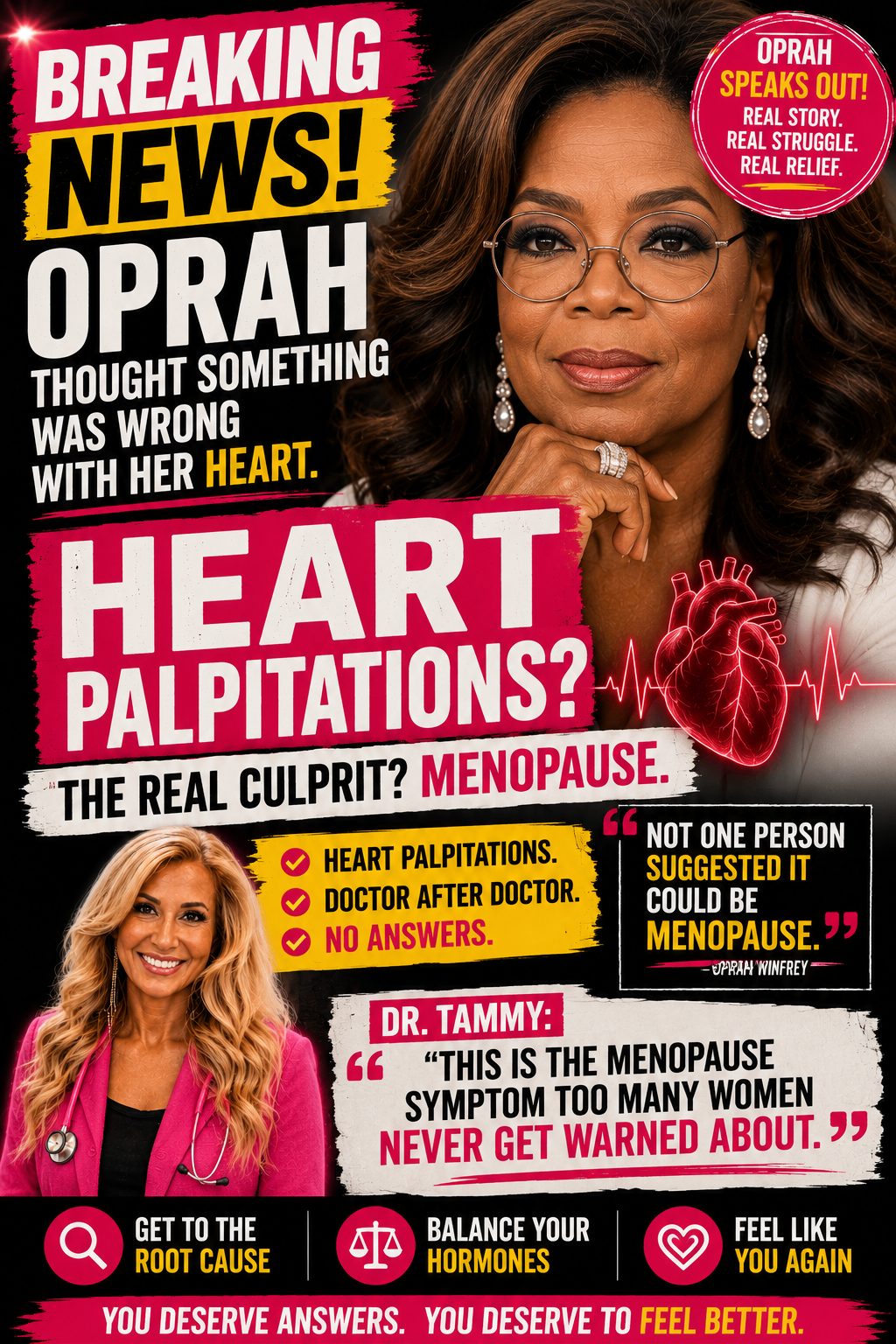
Heart palpitations can be a menopause symptom — but they should never be automatically dismissed.Take the 60-second symptom quiz

Celebrity Menopause Story

Oprah Thought SomethingWas Wrong With HerHeart.

No one initially mentioned menopause.

Oprah Winfrey has shared that heart palpitations began around age 48. She saw multiple doctors and underwent cardiac evaluation, but no one initially suggested that hormone changes could be part of the picture.

Five doctors. Heart medication.
No menopause conversation.

Learn About Palpitations & Menopause →

Educational commentary based on publicly reported statements. Oprah Winfrey is not affiliated with or endorsing Hormone Bliss or Dr. Tammy Tucker.

Read the story
Tabloid-style editorial cover: Oprah thought something was wrong with her heart. Heart palpitations? The real culprit — menopause. Dr. Tammy comments on the menopause symptom too many women never get warned about.
Real Story. Real Struggle. Real Relief.

She Had Access to Excellent Medical Care —
And Still Did Not Get the Whole Story.

In a 2025 ABC News / Good Morning America interview tied to her special An Oprah Winfrey Special: The Menopause Revolution, Oprah Winfrey shared that she experienced menopause symptoms for around two years before realizing what was happening to her body.

She did not have the symptoms most women are taught to look for — and the one that scared her most was her heart.

"I didn't have night sweats, and I didn't have hot flashes, but I had never heard that heart palpitations were a symptom of menopause."

— Oprah Winfrey to ABC News, March 2025

The palpitations came with a level of fear she had never publicly described before:

"When I was going through it, there was nothing. There was nobody. I felt literally like I was going to die every single night."

Menopause was affecting more than her heart. Oprah told ABC News she lost her ability to concentrate so severely that she quietly stepped away from something she loved most: reading.

"I love reading so much, but I let go of the book club because I could not concentrate when I was reading. I could no longer finish a book."

— Oprah Winfrey, ABC News

She only shared the real reason later — that menopause, not lost interest, had pulled her away from Oprah's Book Club. Her advice to other women is direct:

"Because it affects every cell in your body, the first time you have any of the symptoms, that's when you need to go find a doctor who will listen to you, hear you and take action for you."

Quotes reported by ABC News / Good Morning America (Katie Kindelan, March 31, 2025). Shared here as editorial commentary. Oprah Winfrey is not affiliated with Hormone Bliss.

Card 1

Heart Palpitations

Fluttering, pounding, racing, or skipped-beat sensations may occur during the menopause transition.

Card 2

Not Just Hot Flashes

Some women experience sleep problems, anxiety, brain fog, cycle changes, or palpitations instead.

Card 3

Do Not Assume

Palpitations can also be caused by heart rhythm problems, thyroid disease, anemia, medications, stress, caffeine, and other conditions.

Oprah Winfrey speaking on stage
Oprah speaking about menopause — 2025

Why this matters for you

If one of the most recognizable women in the world with access to top doctors could miss the hormonal connection, imagine how often the rest of us are told our symptoms are stress, age, or anxiety without hearing the whole story.

The takeaway

Heart symptoms deserve evaluation. Women also deserve hormone education.

Safety First

Palpitations Deserve Attention.

Hormonal changes may contribute to palpitations, but new or concerning heart symptoms should be properly evaluated. Do not use this page or quiz to decide that a symptom is "just menopause."

Emergency

Seek urgent medical care for palpitations accompanied by chest pain, fainting, severe shortness of breath, new weakness, confusion, or symptoms that feel severe or dangerous.

Non-emergency

Arrange medical evaluation if palpitations keep returning, last more than a few minutes, are becoming more frequent, or occur with a known heart condition.

Dr. Tammy Tucker, hormone health educator, in a hot pink blazer with a stethoscope.

Dr. Tammy's Take

Menopause Can Mimic Other Problems — But That Does Not Mean We Skip the Workup.

Heart palpitations can feel like your body has suddenly hit the panic button.

Hormone fluctuations may make the heartbeat feel faster, stronger, or more noticeable. But palpitations are a symptom — not a diagnosis.

The right approach is not to assume it is your heart, and it is not to assume it is menopause. The right approach is to evaluate the symptom, rule out important causes, and look at the whole hormonal picture.

"Women deserve both: appropriate medical evaluation and an informed menopause conversation."

— Dr. Tammy Tucker

Could There Be Other Hormone Clues?

Palpitations rarely tell the whole story by themselves.

  • 1Periods becoming irregular
  • 2Periods becoming heavier or lighter
  • 3Hot flashes
  • 4Night sweats
  • 5Sudden chills
  • 6Waking during the night
  • 7Trouble falling asleep
  • 8Anxiety
  • 9Feeling suddenly panicked
  • 10Brain fog
  • 11Forgetfulness
  • 12Difficulty concentrating
  • 13Fatigue
  • 14Headaches or migraines
  • 15Breast tenderness
  • 16Joint or muscle discomfort
  • 17Dry or itchy skin
  • 18Hair changes
  • 19Vaginal dryness
  • 20Pain with sex
  • 21Lower libido
  • 22Urinary changes
  • 23Weight or body-composition changes
  • 24Feeling less resilient to stress
  • 25Feeling unlike yourself

These symptoms may also have other causes. Symptoms should be interpreted alongside age, menstrual history, medication use, health history, examination, and appropriate testing.

What Do Heart Palpitations Feel Like?

Fluttering

A quivering sensation in the chest, as if the heart is briefly out of rhythm.

Pounding

A stronger-than-usual heartbeat you can feel in the chest, neck, or ears.

Racing

A heartbeat that suddenly feels much faster than the situation calls for.

Skipped or extra beats

A sensation that a beat was dropped or that an extra thud arrived unexpectedly.

Palpitations are the sensation of becoming unusually aware of your heartbeat. They may be brief or prolonged and may happen at rest, during stress, at night, or after certain triggers.

Common Factors Worth Reviewing

  • Caffeine
  • Alcohol
  • Nicotine
  • Dehydration
  • Poor sleep
  • Stress or anxiety
  • Certain medications
  • Thyroid dysfunction
  • Iron-deficiency anemia
  • Heart rhythm abnormalities
  • Hormonal changes

Do not assume any one factor is the cause without evaluation.

Free 60-Second Symptom Check

Could Hormones Be Part of the Picture?

Take this 60-second symptom check. It cannot diagnose menopause or determine the cause of heart palpitations.

60-second symptom check

Could This Be Perimenopause?

8 quick questions. It is not a diagnosis — it is a starting point to understand the pattern your body may be showing you.

No email required. Your answers stay on your device.

Oprah Had Five Doctors.
The Menopause Question Still Wasn't Asked.

If one of the most recognizable women in the world could miss the hormonal connection, imagine how many other women are still being told their symptoms are stress, age, or anxiety without hearing the whole story.

Heart symptoms deserve evaluation. Women also deserve hormone education.

How Hormone Bliss Helps

Recognize the Pattern

Understand how sleep, cycles, mood, temperature regulation, cognition, and sexual health may change during perimenopause.

Explore Testing Options

Learn what hormone testing may help explain — and why testing must be interpreted alongside symptoms and history.

Ask Better Questions

Get educational tools designed to help you have a more informed conversation about your health.

Frequently Asked

Straight answers about palpitations, perimenopause, and what this content is — and isn't.

Your Move

Your Symptoms Are Clues.
They Are Not a Diagnosis.

You deserve a proper evaluation, real education, and a healthcare conversation that considers the whole picture — including hormones.